
What Is a BRUKL Report?
The report building control asks for on every new commercial building. What it checks, why designs fail it, and how we fix them.

What Is a BRUKL Report?
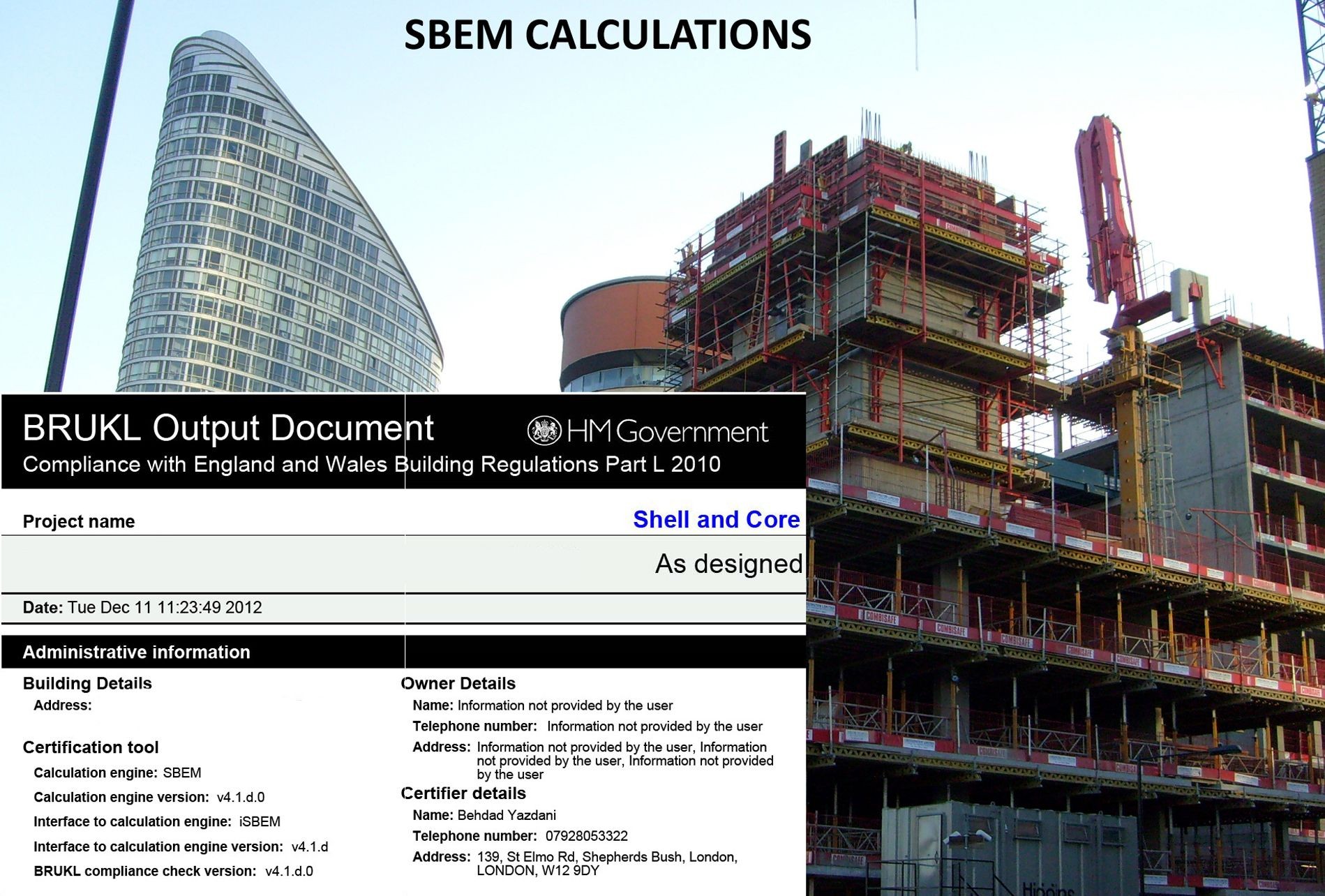
BRUKL stands for Building Regulations UK Part L. It is the compliance report that comes out of an SBEM calculation. Building control asks for one on every new non-domestic building: offices, shops, warehouses, schools, surgeries, hotels and the rest. It shows, in a set format, whether the building meets Part L of the Building Regulations.
When you need one
- New commercial buildings.
- Large extensions to commercial buildings, which building control treats as new buildings.
- Shell and core developments and their first fit-out.
- Changes of use and refurbishments where building control asks for one.
Homes need a SAP calculation instead. Not sure which applies? See SAP or SBEM.
What the report checks
- Carbon and primary energy. The building's emission rate (BER) and primary energy rate (BPER) must not be higher than the targets (TER and TPER). The targets come from a notional building of the same size and shape with a standard specification.
- Fabric. Walls, floors, roofs, windows, rooflights and doors must each meet the limiting U-values.
- Air permeability. The design figure must be no worse than 8 m³/(h·m²) at 50 Pa, and the air test on site has to back it up.
- Building services. Heating, hot water, cooling, fans and lighting must meet minimum efficiencies, with the right metering and controls.
- Solar gain. Spaces should have passive measures to limit solar gain in summer.
- High-efficiency alternatives. The report records whether systems such as heat pumps, heat networks and solar panels were considered.
The last pages are a technical data sheet comparing the actual building with the notional one: energy use, carbon and how each system performs.
Design stage and as-built
Most jobs need two BRUKL reports. The design-stage report goes to building control before work starts, based on the drawings and specification. The as-built report goes at the end, updated with what was actually installed and the air test result. The as-built SBEM model also produces the building's EPC.
Get the design-stage report done early. If the building fails at drawing stage, the fix is a change to the specification. If it fails at the end, the fix is on site and costs more.
Why designs fail
The causes we see most often:
- Heating and hot water. Direct electric heaters and low-efficiency systems are the usual reason a building misses the primary energy target.
- Lighting. Low-efficacy fittings, or no daylight and occupancy controls.
- Too much glazing on the south and west sides, which also trips the solar gain check.
- Air tightness. Designing to the limit of 8 leaves no margin. A better figure helps, but the air test then has to achieve it.
- Missing information. When the M&E specification is not ready, the model has to use default values, and defaults are usually poor.
How we fix a fail
We model the options and tell you which costs least to pass: LED lighting with controls, a heat pump, more efficient fans with heat recovery, better U-values, solar control glass or solar panels. You choose, and we update the model and the report.
Rules changing in 2027
A new edition of Part L for non-domestic buildings comes into force on 24 March 2027. Work can stay on the current rules if building control was notified before that date and work starts before 24 March 2028. Higher-risk buildings have their own dates. The new standard tightens fabric and lighting, expects low-carbon heating, and asks for solar panels on most new buildings. Send us your dates and we will confirm which rules apply.
Price and turnaround
SBEM calculations start from £400+VAT per building, including the BRUKL report and the EPC. Turnaround is 3 working days for small commercial buildings and 5 for larger ones, once we have the drawings and specification.
What we need from you
- Plans, elevations and sections
- Construction details or U-values
- The heating, cooling, ventilation, hot water and lighting specification
- What each area will be used for
Questions we get asked
Who can produce a BRUKL report? An accredited non-domestic energy assessor using approved software. We have 17 years' experience and have done more than 2,000 commercial EPCs.
Is a BRUKL report the same as an EPC? No. The BRUKL report shows Part L compliance. The EPC rates the building from A+ to G. For a new building both come from the same as-built model.
Building control has questioned our BRUKL report. What now? Send us the report and their comments. We check whether the problem is the design or the model, and tell you what needs to change.
Do we need a new BRUKL report for a fit-out? If the shell and core was assessed and the fit-out adds or changes lighting, heating or cooling, building control will usually ask for an updated one.
More: SBEM calculations and BRUKL reports, SAP or SBEM, commercial EPCs, air tightness testing, energy statements
Email your drawings or WhatsApp us for a quote.
Send Us Your Drawings
Send us your drawings and M&E specification and we will tell you where your building stands, with a quote and a turnaround time.